
Sergej Busch
aka Sergey Bush
Organisational & Technology Advisor
Promoter of org-tech evolution and public governance
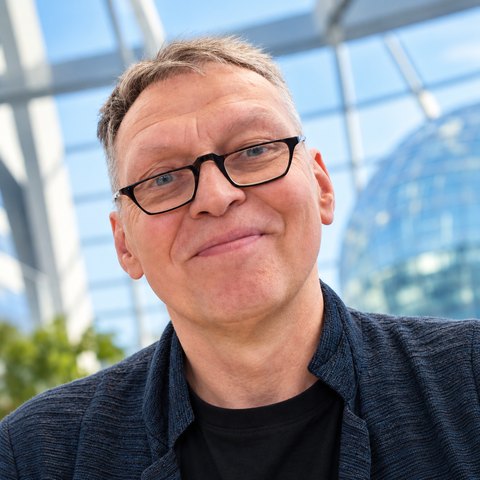
I live in Astana. I arrived in early May 2026 — I want to build lasting ties here, personal and professional alike. The old phrase for that was “friendship between peoples”, and I still like the way it sounds.
To put the business side simply: I brought here what matters most now that AI has arrived — NetApp storage systems, app321, and the practice of users, support and enhancement working together. app321 is an ERP-application-prompt: a codebase compact enough for an AI to hold in full.
So if you are in Astana and something below is of interest — let’s meet in person. Write to b@bush10.org or on Telegram @buschgau. I am here, and in no hurry.


35+ years at the intersection of business, government and IT
Running my own businesses since 1990. Banking since 1992, utilities since 1996, IT infrastructure from 1992 to 2022, building engineering for ten years along the way.
A bank is, above all, a part of the state and its financial policy — in 1992 that was felt particularly sharply. So I look from the business side both at IT and at the organisation as a whole.
The dry facts, so they don’t interrupt later
- Born
- 17 February 1966
- Citizenship
- Germany, Russia
- Based in
- Astana, Kazakhstan
- Languages
- Russian, English, German
- Education
- Omsk State Technical University, information and measurement engineering, 1983–1988, diploma with honours. Leeds Permanent Building Society and the University of Leeds, British Council Financial Sector Scheme, 1994 — mortgage lending, financial engineering
- Businesses
- Hardsoft321 LLC (Omsk) and Lab321 GmbH (Berlin)
- Practice
- IT-Strategy321, BizOpsDev321, BizOpsVibe321
- Contact
- b@bush10.org, Telegram @buschgau

It started in Laboratory 321

The laboratory of superconducting sensors at Omsk State Technical University had the number 321. An ordinary room with an ordinary sign on the door. The number stuck to everything that came afterwards, and it has held ever since.
I built an electronic model of a DC-RSQUID and saw that its current-voltage characteristic was fractal — a Cantor staircase. That is how I quickly became a co-author of a peer-reviewed publication in Physica B (1991).
Then the Soviet Union came to an end. In 1990 we decided it was time to work for ourselves: that is how the small enterprise Laboratory 321 came about.
The bank that served the whole city’s utilities
1992, Omsk Bank. A former branch of Zhilsotsbank — and along with that inheritance came every utility company in Omsk.
We built one of the first Oracle-based core banking systems in Russia from scratch. On a CV that is a single line; in life it was the middle of the non-payment crisis, when settlements travelled across the country for weeks and inflation ate the money while it was still on its way.
What appeared was Russia cheques, correspondent settlements, instant settlements inside the bank and one of the country’s first online banking clients. The bank moved to a different level of service — and other Omsk banks came to us. And with them the Omsk water utility.
My title was Deputy Chairman of the Board, which sounded rather more solid than I looked at the time. In 1994 I spent six months in England on a British Council programme: Leeds Permanent Building Society, the fourth largest mortgage bank in the UK, and the University of Leeds. Mortgages, financial engineering — in a country where all of it had been working for a hundred years.
From 1995 — Compatriots Bank, where we wrote the clearing mathematics for net interbank settlements.
And so Waterman began
The water utility came to the bank for settlements and left with a billing system. We started in 1996; the system went into production in 1997. It is now in its thirtieth year: Rosvodokanal Group, more than ten cities.
Five times over those years people came to compare Waterman with something newer. The solutions were good, and so were the people. Five times they compared — five times they stayed with Waterman.
Why did they stay?
The reason, as I understand it, has two parts.
The first is the code itself: its quality and its capabilities.
The second is a full-cycle team, inseparable from its users: the same team works with the sales side, runs the system in production and develops it further. Such a team is the carrier of the cognitive cloud — the domain language, the real scenarios and the unwritten rules by which the system lives.
And with the arrival of AI the story has a sequel. The next step for Waterman is Billing321: the same full-cycle team, now with AI amplification.
Along the way — crises, cables and facades
1998. The crisis swept across the whole country and new sources of growth were needed, so we had to diversify. For the next ten years, in parallel with IT, I worked in building engineering: structured cabling, backup power, some of the first ventilated facades in Omsk.
The field was not entirely foreign. A bank is critical infrastructure from day one, and by then we had come out of the computing centre of the Central Bank into independent work. Fault tolerance, backups and uninterruptible power were with us from the start: the balance has to reconcile every single day, not by the reporting deadline.
2008–2013 — Sobinbank and Otkritie FC, advisor to top executives. M&A, crisis management, support of mission-critical client services. Once that meant a literal “fire in the engine room”.
1992–2022 — infrastructure for business-critical applications: Sun Microsystems, NetApp. Sizing, deployment, maintenance.
2008–2026 — open-source CRM in banking. The first app321 deployment was at Uralsib Bank in 2021: cash and settlement services were moved out of a heavyweight core banking system into an open-source solution. app321 is listed in the Unified Register of Russian Software, No. 28559 of 23.06.2025.
Is one person with AI enough now?
Since 2025 I have had a separate focus: AI-amplified prototyping. What used to take months and a long chain of meaning passed from analyst to architect and on to developer is now done in days. By two or three people with AI agents. Including where the regulatory burden is heavy: banking, utilities.
But a prototype is not yet production. To reach a working system and stay with it for years, you still need the same Team321. One in the field is no warrior, not even with AI: it amplifies a team, it does not assemble one for us.
On Agile, by the way. Its central message can also be read as: leave us alone and let the team work properly. Among friends, that is exactly how we read it.

What I do now
Three pages are written out in full, so that this one does not have to repeat them:
- IT-Strategy321 — digital and operational risk in the language of owners and boards. Not about technology, but about dependency, cost and controllability.
- BizOpsDev321 — a team model in which business, operations and development are not torn apart. The longest-running Team321 has been working for more than forty years.
- BizOpsVibe321 — AI amplification of a team without losing controllability, accountability or common sense.
A point of growth
The world always needs points of growth, and right now especially. Astana is a good candidate!
You can start with a light conversation about “digitalisation and AI”, or come in from any professional angle: CRO, CFO, CTO, even HR. Write to b@bush10.org or on Telegram @buschgau. And if you are in Astana — let’s meet.